
HOW AN IDEA, A COLLECTION OF UNEXPECTED COMPONENTS AND A WILLINGNESS TO EXPERIMENT CAN TURN A FAMILIAR MINIATURE INTO SOMETHING TRULY INDIVIDUAL.
Beyond the box: where ideas begin
For many Warhammer hobbyists, the fun doesn’t stop when a miniature comes out of the box. Sometimes the most interesting projects begin when you start looking at the parts in a completely different way.
A head from one kit, a weapon from another, or an unusual combination of components can become the starting point for something entirely new. The challenge (and the enjoyment) is working out how those pieces can come together to create a miniature that feels like it has always belonged.
At Bitzbox, we know how much creativity goes into these projects. So, rather than looking at kitbashing as simply swapping one part for another, we wanted to explore some of the ideas behind making a conversion really stand out.
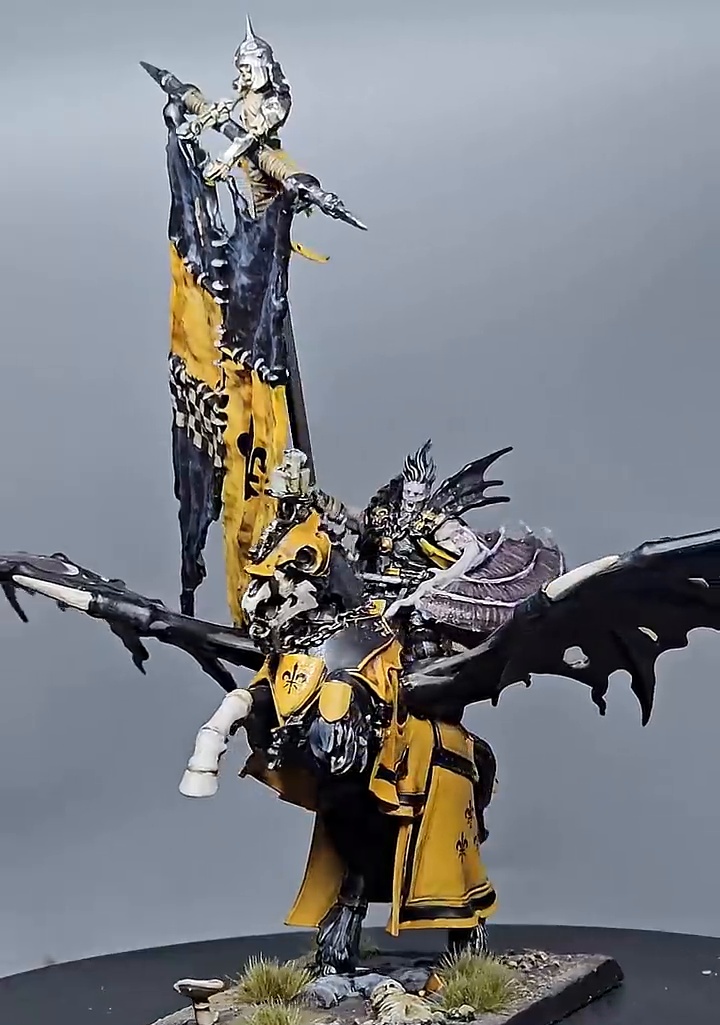
Craig’s Bretonnian Battle Standard Bearer on Pegasus is a great example.
Build around a theme
A strong theme can make all the difference to a conversion. It gives you a direction to work towards and helps you decide which components will suit the character you’re trying to create.
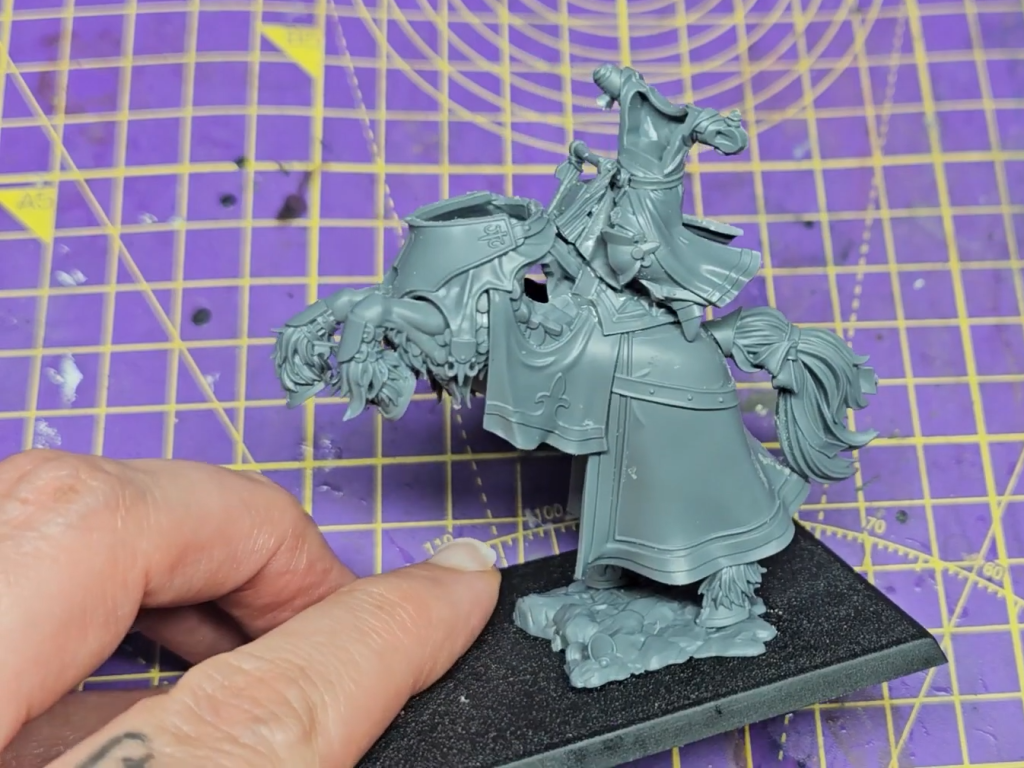
For Craig, the starting point was a new Bretonnian army inspired by Mousillon, with a darker, corrupted feel. Rather than following the more traditional look of a Bretonnian force, he wanted something that felt much more sinister.
That decision influenced the whole Battle Standard Bearer project. The Pegasus needed to look suitably unsettling, the rider needed to fit the theme, and the overall model had to feel like part of the same army.
It’s a useful way to approach any conversion. Instead of choosing parts simply because they look interesting individually, think about how each one contributes to the overall character of the miniature.
Look beyond the kit a part came from
One of the most exciting things about working with spare components is discovering how well parts from completely different ranges can work together.
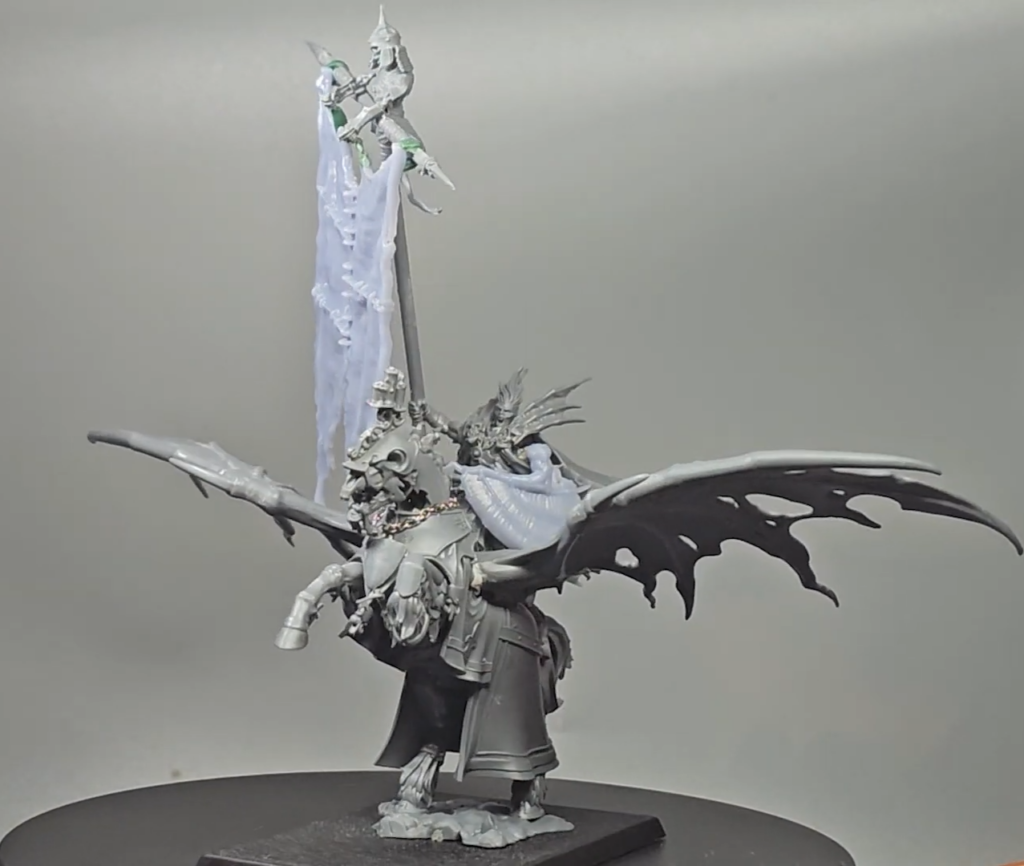
Craig’s Pegasus conversion brings together pieces from a variety of miniatures. A Nighthaunt head gives the mount a very different appearance, while parts from Mannfred’s miniature provide the rider with a suitably imposing body and cloak.
The Nighthaunt wings are another particularly striking choice. They help transform the familiar Pegasus into something much more fitting for Craig’s darker army theme.
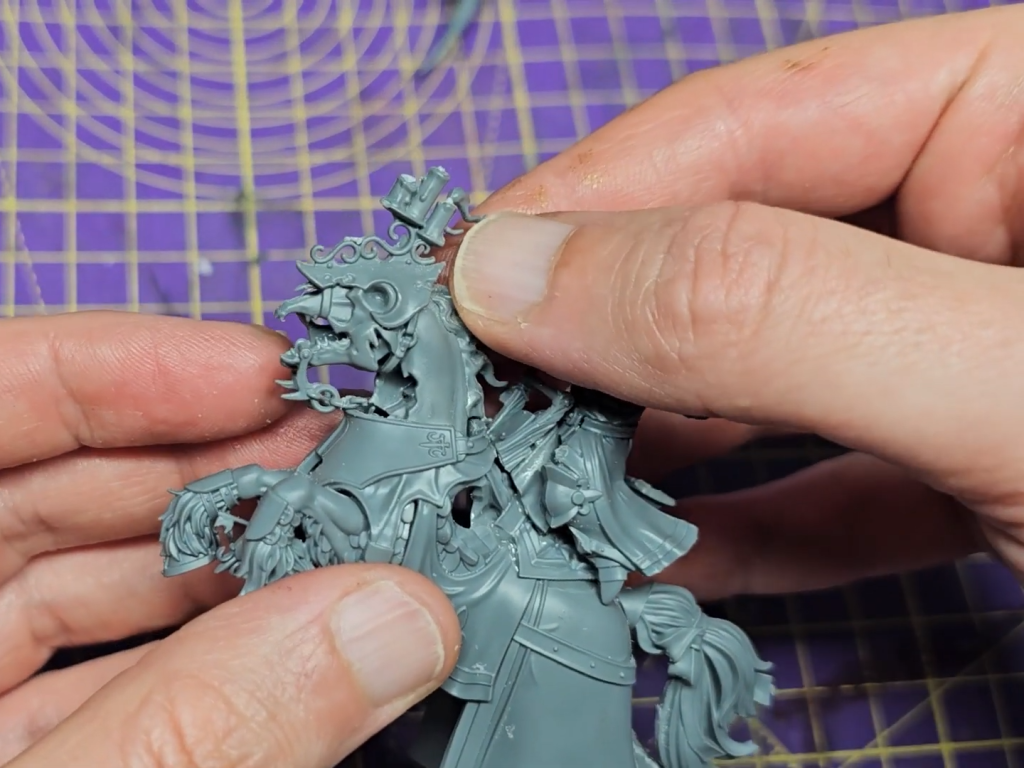
It’s worth looking at components for their shape, pose and character, rather than just the miniature they originally came from. A part that seems an unlikely choice on its own might be exactly what another project needs.
The rider is another good example. Rather than using the original Bretonnian body, Craig adapted Mannfred’s body and cloak to create a very different look.
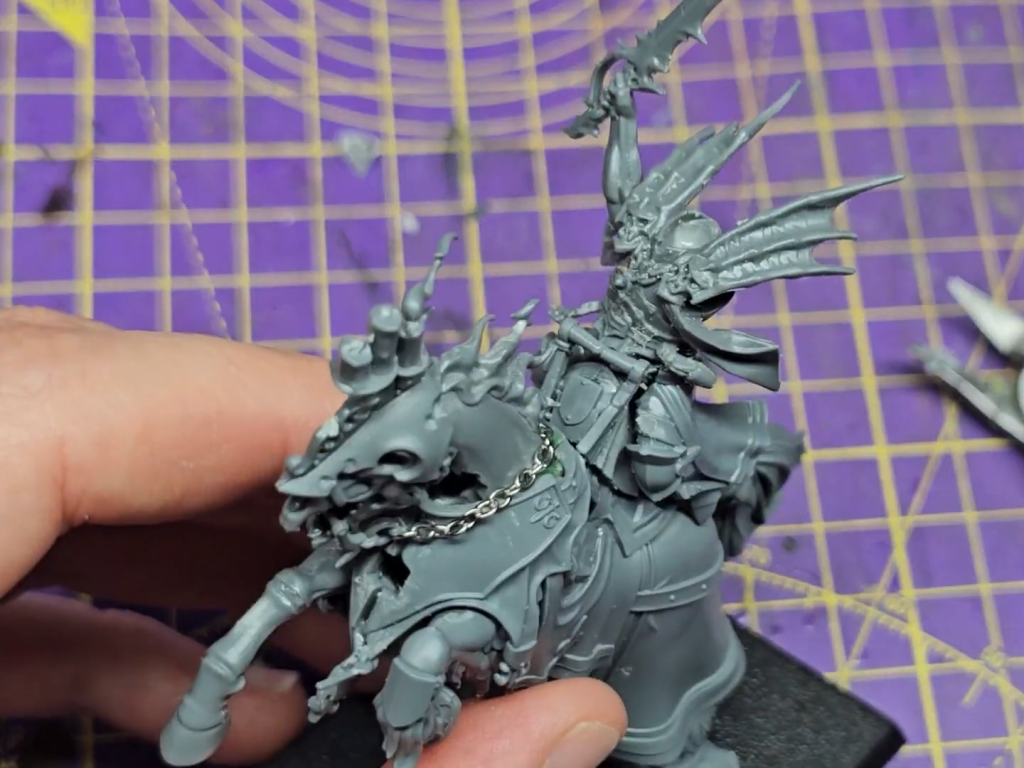
Thinking beyond the original purpose of a component opens up all sorts of possibilities. Sometimes the right part for a conversion comes from a miniature you might never have considered using.
Making different parts work together
Of course, finding the right components is only part of the challenge. Getting pieces from different kits to fit together convincingly can take a little extra thought and patience.
Different miniatures aren’t necessarily designed to fit together. Connection points, proportions and shapes can all vary, meaning some trimming, adapting or filling may be needed to achieve the result you’re after.
Craig encountered this when attaching the Nighthaunt wings to the Pegasus. The fitting wasn’t straightforward, so he used modelling putty to help fill the gaps and tidy the joins.
It’s a good example of how a conversion can involve more than simply choosing interesting parts. Sometimes it’s the work needed to bring those components together that makes the finished model successful.
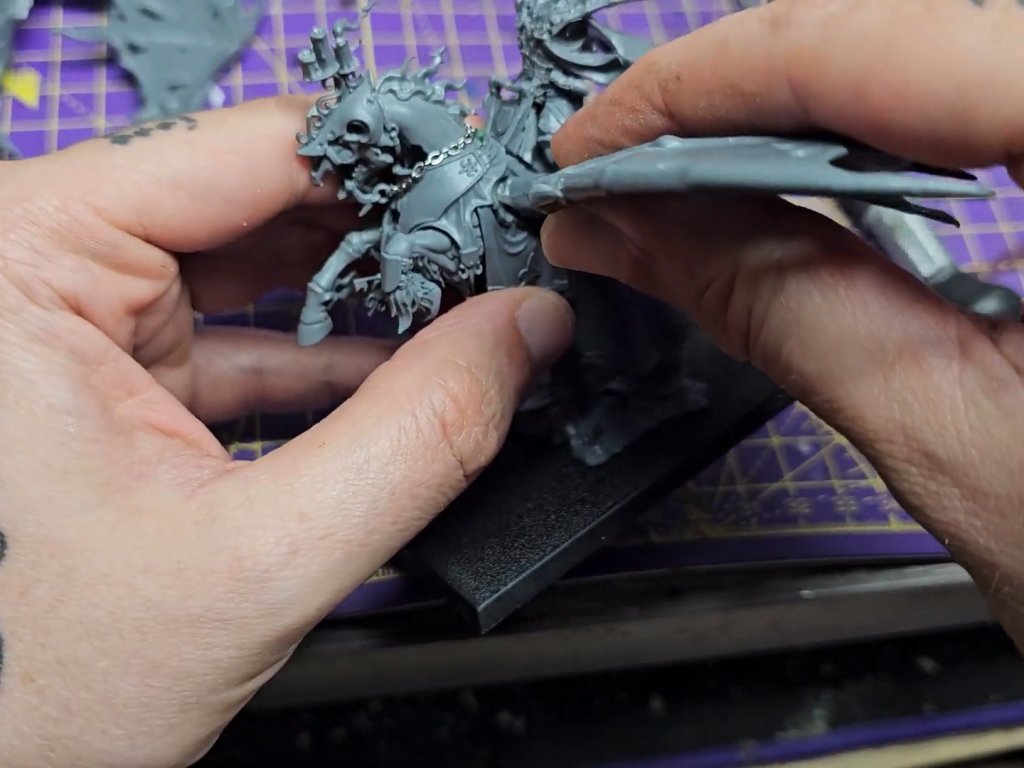
Taking time to consider how pieces meet, where gaps might appear and how the finished model will look from different angles can make a real difference.
Give the character a focal point
Every characterful miniature benefits from something that catches the eye. It might be an unusual weapon, an impressive mount, an oversized shield or a distinctive banner.
For a Battle Standard Bearer, the banner is an obvious opportunity to make the model stand out.
Craig chose to create his own banner design for this project. He used AI to help explore the basic shape, then refined the design himself before turning it into a 3D-printable file.
The banner is deliberately oversized, giving the Battle Standard Bearer a strong presence and helping distinguish him from the rest of the army.
He also experimented with different components for the arm and banner pole, eventually combining an arm from a Chaos Marauder Horseman with a Chaos Warrior banner pole.
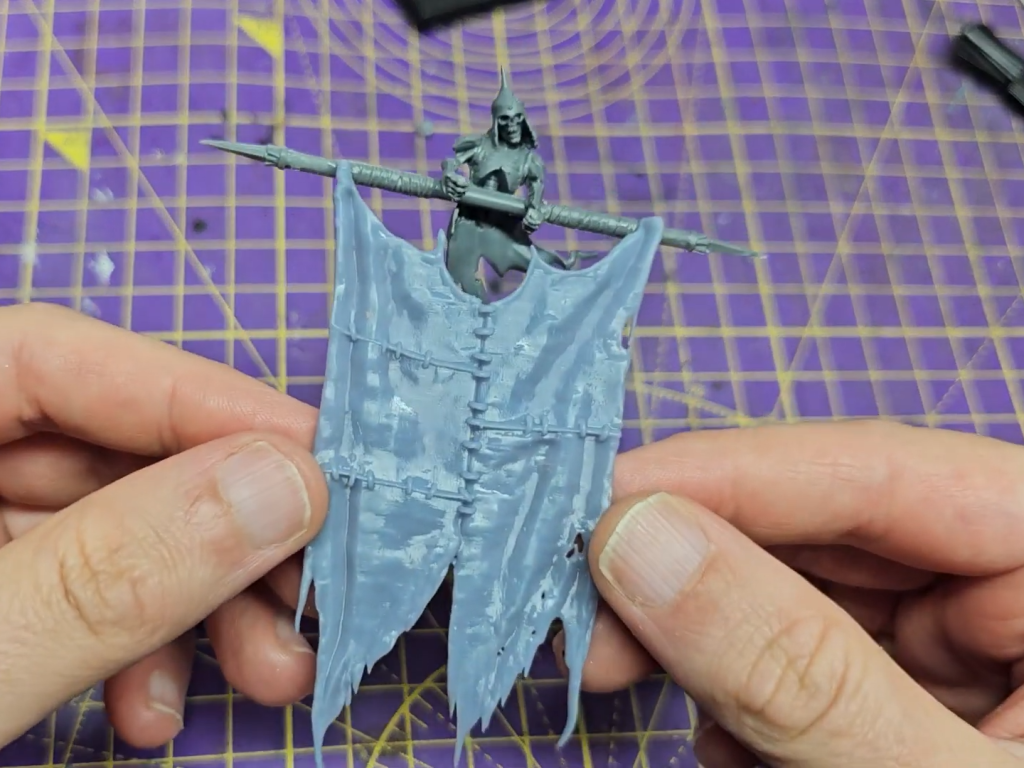
It’s a good example of how a conversion can combine standard components with something entirely personal. The result doesn’t have to come from a single kit to feel like a cohesive design.
Sometimes the best ideas come from changing direction
Even with a clear theme in mind, a conversion doesn’t always go exactly to plan.
Parts may be the wrong size, a connection might not work, or something that looked promising during the planning stage might not look quite right once it’s assembled.
Craig encountered this when choosing the hand for his banner bearer. His initial idea was to use a Chaos Warrior hand, but it proved too large for the arm he wanted to use. He changed direction and chose an arm from a Chaos Marauder Horseman instead, keeping the Chaos Warrior banner pole.
He also brought in a head from the Blood Knights kit and a shield from the Knights of the Realm, adding further details to complete the character.
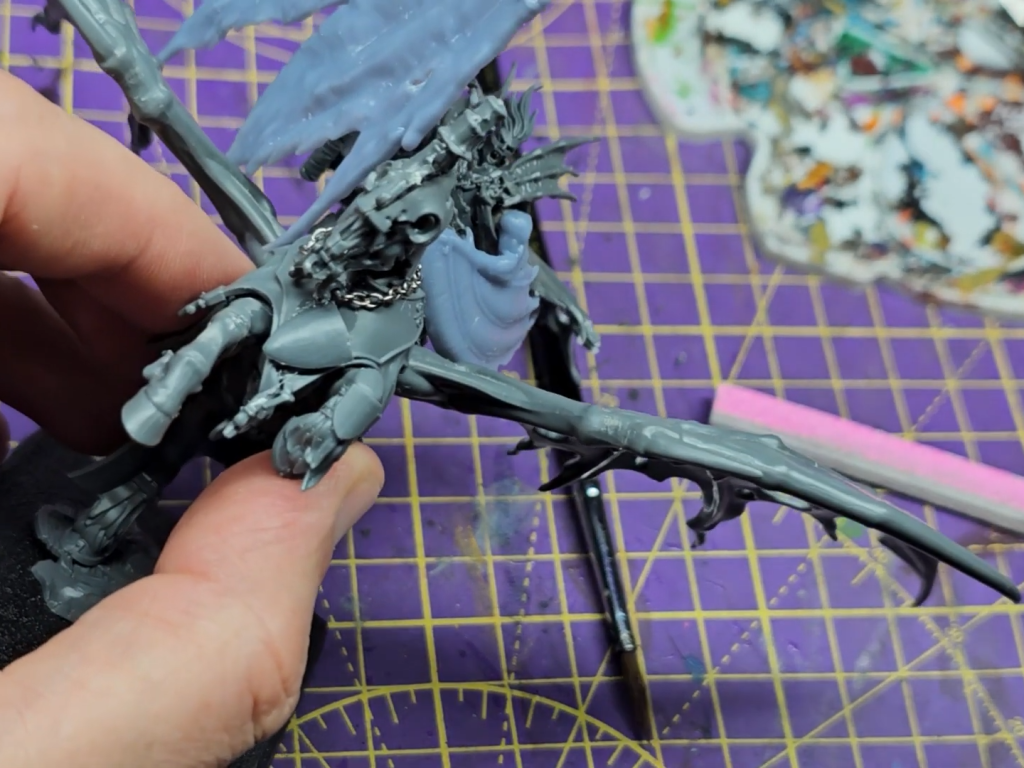
Sometimes accepting that a part isn’t quite right, and finding another way forward, is what leads to the best result.
The finished conversion
Bringing all these ideas together, Craig’s Bretonnian Battle Standard Bearer is a very different take on the traditional Pegasus-mounted knight.
The Nighthaunt-inspired mount, adapted rider, custom banner and carefully chosen components all contribute to the darker Mousillon theme. It’s a conversion built around a clear idea, but one that also developed through experimentation along the way.
Since completing the conversion, Craig has brought the model to life with a bold black and yellow paint scheme. The contrasting colours pick out the details of the armour and barding, while the ghostly Pegasus and oversized banner give the finished model plenty of character.
Want to see how the conversion was made?
We’ve looked at some of the creative decisions behind Craig’s Bretonnian Battle Standard Bearer, but what about putting those ideas into practice?
In the original video, Craig takes you through the actual conversion process, showing how he brings together components from different kits to create his Mousillon-inspired Pegasus-mounted character.
From adapting the mount and fitting the wings to assembling the rider and creating a custom banner, you can follow the build as it takes shape and see some of the techniques involved along the way.
If you’re looking for inspiration for your next conversion, or want to see exactly how Craig approached this particular project, you can watch the full video below.
Watch: Bretonnian Battle Standard Bearer Kitbash